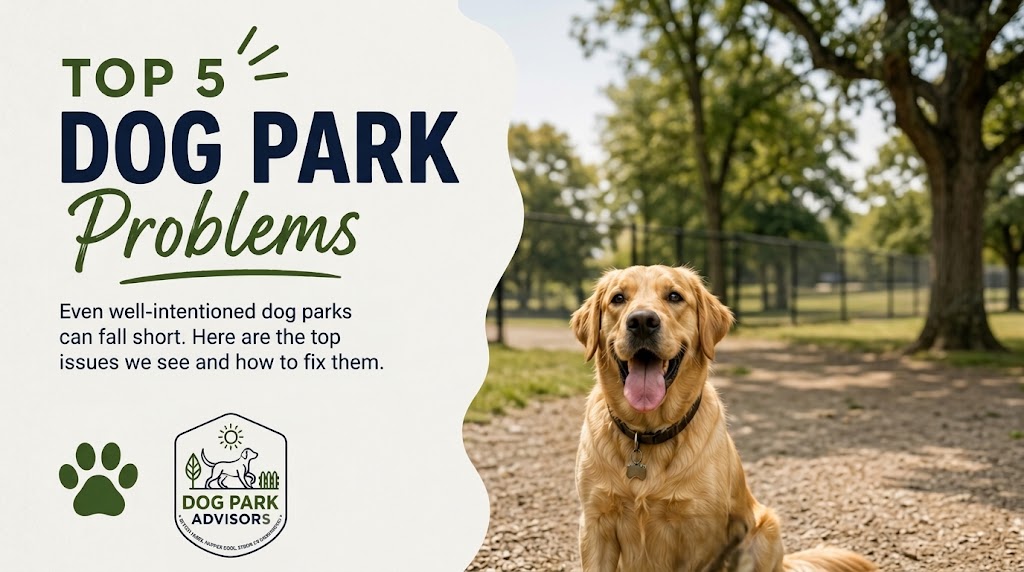
A successful dog park is about much more than putting up a fence and adding a few pieces of equipment. The best dog parks balance safety, functionality, comfort, maintenance, and the needs of both dogs and their people.
Here are five of the most common problems that can keep a dog park from reaching its full potential.
1. Poor Design & Layout
The layout of a dog park has a huge impact on how people and dogs move through the space. Poorly positioned entrances, narrow circulation areas, limited visibility, or amenities placed in high-traffic areas can create congestion and unnecessary conflicts.
The solution: Think about the flow of the entire park—from the moment someone arrives to where dogs run, rest, play, drink, and relieve themselves. Good design creates intuitive movement and gives dogs enough space to interact naturally.
2. Lack of Maintenance
Even a beautifully designed dog park can deteriorate quickly without a realistic maintenance plan. Mud, drainage problems, damaged fencing, full waste stations, worn surfaces, and broken amenities can make a park unpleasant or unsafe.
The solution: Choose durable materials and products, plan for drainage and high-traffic areas, and establish a maintenance routine before the park opens.
3. Not Enough Room to Play
Dogs need room to move. When a park is too small or doesn't provide enough variety, it can become crowded and stressful—particularly during busy periods.
The solution: Make the most of the available footprint. Thoughtful zoning, open running areas, separate spaces when appropriate, and carefully selected enrichment features can create a more engaging experience without simply adding more equipment.
4. Unclear or Missing Rules
Rules aren't just signs on a fence. They help establish expectations and give park users guidance when problems arise.
The solution: Keep rules visible, concise, and easy to understand. Consider everything from vaccination requirements and leash policies to aggressive behavior, waste cleanup, children in the park, and supervision.
5. No Shade or Shelter
Dogs aren't the only ones using a dog park. Their humans need a comfortable place to stand, sit, supervise, and take a break. Without shade or weather protection, a park may become uncomfortable—or unusable—during portions of the year.
The solution: Incorporate shade trees, shade structures, benches, shelters, and other weather-conscious design elements into the plan from the beginning.
The Bottom Line
A great dog park isn't simply a fenced piece of land with some equipment inside. It's a carefully planned environment designed around the needs of dogs, their owners, and the community.
The good news is that many common dog park problems are preventable when they're considered before construction begins.
A great dog park doesn't happen by accident. It happens by design.
Dog Park Advisors provides vendor-neutral dog park consulting for communities, property managers, HOAs, developers, and parks professionals.